Aa
  • Read, Watch, Listen
  • TJI Series
  • Community Action
  • Events
  • Zedi
Follow us and continue the conversation
  • LinkedIn
  • Instagram
  • FaceBook
  • X
  • YouTube
Test yourself with the TJI Quiz!

Adjust size of text

Aa

Follow us and continue the conversation

  • LinkedIn
  • Instagram
  • FaceBook
  • X
  • YouTube

Your saved articles

You haven't saved any articles

What are you looking for?

Original reporting, insightful analysis and diverse views, delivered straight to your inbox

  • LinkedIn
  • Instagram
  • FaceBook
  • X
  • YouTube
Your support fuels our mission to inform, entertain and inspire.

The Jewish Independent is bound by the Standards of Practice of the Australian Press Council. If you believe the Standards may have been breached, you may approach The Jewish Independent or make a complaint to the Australian Press Council in writing at www.presscouncil.org.au. The Council may also be contacted on 1800 025 712.

  • Our Story
  • Contact us
  • Our Team
  • Support us
  • Guidelines
  • Pitch your idea
  • Republishing us
  • Community Action
  • Our Awards
  • LinkedIn
  • Instagram
  • FaceBook
  • X
  • YouTube
Aboriginal FlagTorres Strait Islanders Flag

The Jewish Independent acknowledges Aboriginal and Torres Strait Islander peoples as the Traditional Owners and Custodians of Country throughout Australia. We pay our respects to Elders past and present, and strive to honour their rich history of storytelling in our work and mission.

© The Jewish Independent 2026All Rights Reserved
Website design and development by Your Creative, MelbourneTerms & ConditionsPrivacy Policy
HomeRead, Watch, ListenAustralia
Israel Hamas WarInterviewAustralia

‘If I can help avert a cultural civil war, I will regard my life as well-lived’

Josh Szeps left his ABC radio show to wrestle freely with ideas on his Uncomfortable Conversations podcast. He has strong opinions on the world since October 7.
Vic Alhadeff
Print this
Josh Szeps

Josh Szeps

Published: 15 August 2024

Last updated: 15 August 2024

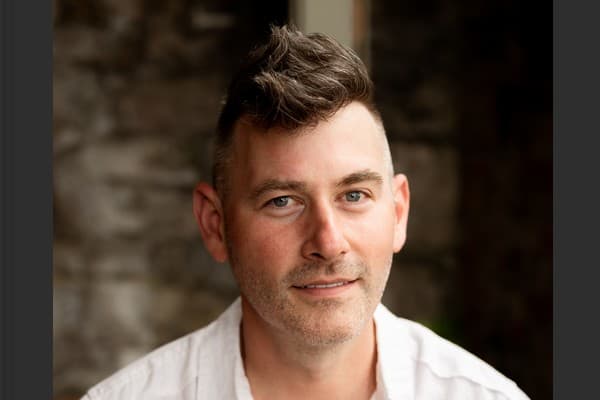
There has been “a collapse in reasoned conversations since October 7,” says Josh Szeps. “There’s a worthy instinct on the Left to reflexively support the underdog. Yet many people are confused about who the underdog is.

“We see poor brown people standing in rubble, and our post-colonial guilt kicks in. Then we see a straight white Israeli male with flawless English and an expensive suit addressing US Congress, and we code his side as all-powerful,” he tells The Jewish Independent.

“But that’s a failure of imagination. It’s a failure to see the perspective of a people who were nearly annihilated, given a state and then instantaneously invaded by all their neighbours who came back for another bite in 1967 and again in 1973, followed by the intifada and the second intifada.

“If you’re going to have empathy for the frustrated aspirations of the Palestinians, you also have to have some empathy for the siege mentality that exists in Israel.”

Szeps says the difference between him and his leftist friends is that he doesn’t assign all the blame to Israel. 'I give agency to the Arabs'.

Szeps, 46, says the difference between him and his “leftist friends” is that he doesn’t assign all the blame to Israel. “I give agency to the Arabs. They’re also a player and they make choices.

“There’s moral confusion in much of the anti-Zionist Left in conflating the misdeeds of the Likud and Netanyahu with the existence of Israel and the right of the tiny global minority of Jews to self-determination.

“It’s a tremendous but stealthy shift, from the position that ‘Israel is a flawed liberal democracy trying to do its best’ to the position that Israel is a colonial-settler project that had no legitimacy from day one.”
That shift has led him to be more outspoken, through his Uncomfortable Conversations podcast, which tries to “unpick what is rational and irrational, true and untrue, just and unjust”.

Regarding his departure late last year from the ABC, where he was a fixture of ABC Radio Sydney and the host of the Afternoon Show, Szeps says “October 7 had nothing to do with my departure. But it was emblematic of how divided we’ve become as a culture, how trapped we’ve become inside our echo chambers.

“You can’t extricate this schism from the impact of social media. It’s a bias-confirmation tool. The job of an algorithm is to maximise the time you spend on the app. It does that by pandering to what you believe and demonising what you don’t.

“We think it’s a window, but it’s actually a mirror. The way we’re consuming information is making it harder to have intellectual empathy. It makes more positions seem beyond the pale.”

The media landscape has changed, says Szeps. “One of the challenges in legacy newsrooms is how to foster diversity but retain objectivity. There’s a laudable desire to make journalism less of a middle-aged straight white male-dominated pursuit. But implicit in the call for diverse voices is the assumption that different perspectives can have their own truth. That’s anathema to the news. You’re supposed to be delivering a universal set of facts. 

October 7 had nothing to do with my departure. But it was emblematic of how divided we’ve become as a culture.

“On the other hand, when it comes to analysis and commentary, I’d argue we need more intellectual diversity, not less. You want the broadest possible range of views. And they need to engage authentically, with intellectual empathy and courage and nuance.

“Tribal thinking doesn’t cut it. It’s not good enough for pro-Israel voices to cry “antisemitism” whenever anyone protests Israel. And it’s not good enough for pro-Palestinians to launder antisemitic tropes by pretending they’re “anti-Zionist”.


If you tell me, as many leftists have done since October 7, that Zionists are bloodthirsty globalist puppet-masters who are contaminating the native-born population and forcing themselves on innocent women and children, we know that rhetorical move.” 

Obama spoke of “the soft bigotry of low expectations”, Szeps notes. “He was referring to black Americans, but the Left has the same attitude towards Middle Eastern Arabs - the expectation that they’re helpless victims. Everyone deserves agency. And everyone deserves sympathy.”

Born in Balmain, Szeps attended Fort Street High School and “had a great, highly intellectual childhood. I had my bar mitzvah with Rabbi Jeffrey Kamins at Emanuel Synagogue. Mum was raised Catholic in New Zealand but converted to Judaism in a fit of hippy whimsy. 

“Apart from the fact that I briefly wanted to be a pilot, my heroes were television smart-arses. Jon Stewart, David Letterman, Conan O’Brien. I did work experience on the Ray Martin Show when I was 15, and that sealed it.

“But I figured I’d have better job prospects in news than in entertainment, so I went into journalism instead of stand-up. It could have gone either way. I just wanted to wrestle with ideas in public. Now I get to do it with both truthfulness and, hopefully, humour.”

His grandmother’s story had its share of vicissitudes. A Jewish teenage Communist in Poland, she fell in love with a huckster and in 1938 they had the foresight to leave Poland, leaving behind her family, all of whom perished at the hands of the Nazis.

Being able to nudge people to greater empathy is a laudable thing to be doing.

“They had a daughter, her partner joined the French Resistance and she stayed in Paris - until being arrested by the French police. About to be deported to a Nazi camp, she appealed to a guard to let her out to retrieve her baby; the guard complied.

She and her daughter reunited with the baby’s father, she got pregnant with Josh’s father and was smuggled into Switzerland. “My Dad, Henri Szeps, was born in a Swiss refugee camp. It was 1943. Dad was fostered to a Lutheran family in the Swiss Alps and spent his youth there.

“His mother took him back at the age of six, and two years later, 1951, she and a new partner purchased tickets on a refugee boat. The options were the United States, Canada and Australia. “My grandmother chose the one that was furthest away. That’s why I’m Australian. As a lovely wrinkle to the story, we’re very close to the Lutheran foster family in Switzerland. We regard them as family and I see them whenever I’m in Europe.

“Being able to speak to hundreds of thousand or even millions of people, and nudge them to greater empathy, to a point of view that they previously misunderstood, is a laudable thing to be doing,” Szeps reflects.

“If in some small way I can contribute to averting a cultural civil war, I will regard my life as having been well-lived. I’m trying to extricate people from thought bubbles and echo chambers.”

You might also like
  • Western ‘Palestinianism’ colonises everything – and hurts Palestinians
    Andres Spokoiny
  • Israel is cementing its control over the West Bank and East Jerusalem while the world is distracted
    Martin Kear
  • Abuse by IDF soldiers humiliates Muslim Palestinians
    Ben Lynfield
logomark.67a07ee3
We believe in the free flow of information

Republish our articles for free, online or in print, by using our Creative Commons licence

You might also like

    Commissioner Virginia Bell
    Royal CommissionAnalysisAustralia

    Now is the time for the Royal Commission to deliver, not be politicised

    Dean Sherr 2
    Albanese Bondi
    Royal CommissionAnalysisAustralia

    Prime minister’s absence exposes weakness in Royal Commission hearings

    Michael Visontay
    Jewish word map
    FeatureArts & Culture

    Was the barmi a shemozzle? How Australians use Jewish words 

    Caroline Hendy & Emma Breslow 1

About the author

Vic Alhadeff

Vic Alhadeff

Vic Alhadeff OAM is former CEO of the NSW Jewish Board of Deputies and former editor of the Australian Jewish News.

More from the author

InterviewArts & Culture

‘The battle for the future of Jews will be fought in the cultural arena’

InterviewWorld

IHRA head: discrediting definition means ‘turning a blind eye’ to anti-Zionism

OpinionArts & Culture

40 years since Lanzmann’s Shoah, his central question remains: When is it too late?

OpinionAustralia

A shocking moment at Sydney Writers’ Festival

Comments3

  • Avatar of Robert Rands

    Robert Rands21 August at 03:30 am

    I’m sorry you can’t express your faith in your normal walking through public places. The resonances of this foul public weather are far greater for you and yours than for me.

    My experience is limited to being a naive American teacher in Sydney, in 1972, when coffee table leftists like me weren’t expecting to receive public abuse from strangers who could only hear my accent and relate it to Australia’s involvement in a colonial war of the day.

    I am not my country (Australia, now). I am not my religion. I can only feel sorry for people who conflate me with other nations and faiths than their own. Feel sorry, and walk cautiously.

  • Avatar of Israel Sean Fliegner

    Israel Sean Fliegner19 August at 05:35 am

    Kia Ora Josh and Vic
    I’ve been stopped in public with “are you Jewish?” The last time I received an unsolicited hug.

    Times before not great. And this is 5 minutes walk from the mighty Sydney Jewish Museum.

    I don’t wear kippa, chai outside Museum, Shul.

    The hate is direct, west of Bondi Junction here in Surry Hills, Darlinghurst.

    There’s no power in saying “be strong” unless and until at least three kippa wearing are together.

    Yes the media is central and crucial beyond doubt.

    Yes too the truth my mezuza is inside, my kippa hidden. A friend turns her ✡️ bracelette inside her wrist on the train: we cannot be Jewish.

    Israel Sean Fliegner

  • Avatar of Laurance J Splitter

    Laurance J Splitter15 August at 07:28 am

    One way – perhaps the only way – to move beyond the illusory safety of our own echo chambers is to engage in dialogue with one another. Participants in genuine dialogue regard themselves and one another as “persons” first and foremost (other aspects of their so-called “identities” are relatively immaterial). They treat one another with care and respect, they create a “safe place” in which appropriate forms of risk-taking are appropriate; they engage in “powerful thinking” which includes careful reasoning, and as much listening as talking, they do their best to empathise with others in sharing common experiences; and they have a general disposition (attitude) toward rethinking an issue or changing their minds.